
"South Central"
6000 article(s) found

Puerto Rico Coffee Bean Region Introduction Central South San Pedro Manor La Rez Yauco Coffee Introduction
Every year Jaime Fortuńo, president of Escogido Yauco agency, silently pays attention to all this work, even the smallest details. Fortuno is an investment banker and a graduate of Harvard Business School. He was determined to seize every opportunity to open up a top-class coffee market in Puerto Rico

Coffee futures prices fell to a 13-year low, but production cuts in Central and South America led to a rebound in prices
Professional coffee knowledge exchange more coffee bean information Please follow the coffee workshop (Wechat official account cafe_style) Coffee futures prices have fallen to the lowest since 2006, as coffee futures prices have fallen to their lowest level since 2006, there will be more bad news in the coffee market. According to Bloomberg, the problem stems from global oversupply, which is largely due to

Guatemala Vivette South Fruit Fine Coffee Bean Water washing treatment
The Republic of Guatemala, a presidential republic in Central America, is located in the south of the North American continent. It is bordered by the Pacific Ocean to the west, the Caribbean Sea to the east, Mexico to the north, Belize to the northeast, Honduras and El Salvador to the southeast, with a total area of 108889 square kilometers. All of Guatemala is made up of mountains and plateaus. In the west, there are Kuchu Matanes Mountains.

South American boutique coffee | description of flavor characteristics of Peruvian Chanchamayo coffee
Peruvian Chanchamayo is considered to be the best quality coffee in Peru, known for its medium body (sometimes light) acidity, pleasant flavor and soft sweet aroma quality, representing all the best qualities of fine coffee from South and Central America. The characteristics of high-quality cha Mayo coffee the high-quality Chanchamayo coffee is smooth and delicate, very

The famous producing areas of Peru in Peru are the brightness of tea Mayou Central American coffee and the alcohol of South American coffee.
Boutique coffee (specialty coffee) is also called specialty coffee selection coffee. It refers to coffee made from a small number of raw beans with excellent taste grown in an ideal geographical environment. Depending on the special soil and climatic conditions in which they grow, they have outstanding flavor. After strict selection and classification, this kind of coffee is hard in texture, rich in taste and stylish.

Guatemala Coffee Farmer and South Korea quickly sign Free Trade Agreement Guatemala Antigua Coffee Export
Professional coffee knowledge exchange more coffee bean information please follow the coffee workshop (Wechat official account cafe_style) local media reported that in order to avoid being isolated from the Asian market, Ricardo Arenas Menes, chairman of the Guatemalan Coffee Association (Anacafe), called on Guatemala to sign a free trade agreement between Central America and South Korea. According to reports, danger
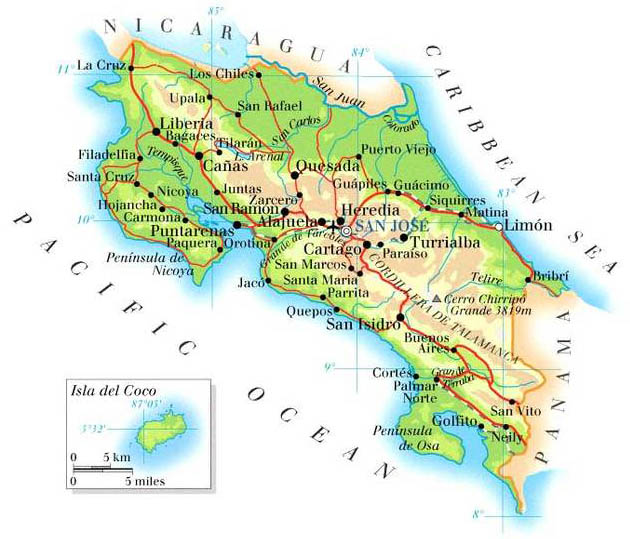
A big country of fine coffee in the south of Central America-- an introduction to the origin of Central American coffee in Costa Rica.
Guide to Caxiang: I haven't told you about the country where coffee is produced for a long time. Let's take a look at the coffee cultivation in Costa Rica today. The editor has something to say: Costa Rica first entered the editor's eyes when he did not know which year's World Cup, Costa Rica played against China, and then. China lost. Costa Rican coffee cultivation was introduced from Cuba in 1779 and only in 1820.

South African Fine Bean Flavor description South African Coffee Bean Kenya Coffee Bean Flavor description
It is fragrant with less acidity, reminiscent of coffee beans from Central America. Coffee production in South Africa (South Africa) is mainly in the northeast of the country, from Natal between Transvaal and Mozambique, extending northward to Transvaal, with a southernmost limit of latitude 30; further south, it cannot be planted due to the harm of early frost.

Introduction of Coffee Origin-- the uniqueness of South African Fine Coffee the taste of South African coffee
It is fragrant with less acidity, reminiscent of coffee beans from Central America. Coffee production in South Africa (South Africa) is mainly in the northeast of the country, from Natal between Transvaal and Mozambique, extending northward to Transvaal, with the southernmost limit of latitude 30 south; further south, coffee cannot be grown due to the harm of early frost.
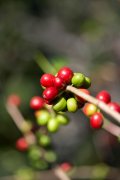
Costa Rican Diamond Hill Manor Central and South American Coffee
Costa Rica has a long history of cultivating coffee, but in the past 10 years, the new dry treatment method has become a trend, collectively known as the new method of honey treatment, which uses the scraper to adjust the scraping degree of the pulp. Output with the color from light to deep (white, yellow-red-white, yellow-red-black) and show a sense of honey from light to strong, acidity, complex aroma thick feeling has its own depth, each has its own advantages. Diamond Hill

Full-bodied Peruvian coffee with both the brightness of Central American coffee and South American coffee
The term "fine coffee" was first put forward by Ms. Knudsen of the United States in Coffee and Tea magazine. At that time, Ms. Knudsen, as a coffee buyer at B.C. Ireland in San Francisco, was very dissatisfied with the neglect of the quality of raw coffee in the industry, and even some big roasters mixed a large amount of Robesda beans in the comprehensive beans, so she put forward the concept of boutique coffee.

Colombian coffee bean species morphology Central and South American flavor
Species Morphology Colombian Coffee Plant Morphology Colombian coffee is mainly small grain coffee. Plants are small trees or large shrubs, 5-8 m tall, usually much branched at base; old branches gray-white, nodes dilated, young branches glabrous, compressed. Leaves thinly leathery, ovate-lanceolate or lanceolate, 6-14 cm long and 3.5-5 cm wide, tip long acuminate, acuminate 10-15 mm long, basal
Guatemala Antigua Flower God Coffee Culture China Coffee Network Central and South American beans
Coffee was really introduced into Guatemala in 1750 by Father Jesuit, where the coffee industry was developed by German colonists at the end of the 19th century. Today, most of the coffee industry's production takes place in the south of the country. There are seven main coffee producing areas in Guatemala: Antigua, Coban, Atitlan and Huehuet.

Description of cherry blossom flavor and taste of Paradise Manor in Columbia Coffee Bean producing area
Colombia has good mountains and water, rich landforms, groups of volcanoes, soil and rain, making it an excellent place to grow coffee. The main commercial beans in the central part are the bulk commercial coffee producing areas of Colombia, commonly known as [MAM] M refers to Medillin Medin, the capital of Antioquia province, A refers to Menia Armenia, the capital of Kindio province, and the last M refers to Calda province.

South Central Puerto Rico Larez Coffee with strong fragrance
Yaocote, a gourmet coffee from Puerto Rico, is grown only on three farms in the southwest of the island. It has a strong flavor and a long aftertaste. This kind of coffee is very expensive and its flavor is comparable to that of any other coffee variety in the world. In the Yauco area, the coffee is owned and operated by local planters. The mountain climate here is mild and the plants are long.
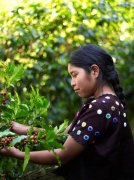
Guava Plain Manor, New Oriental region of Guatemala, Central and South American Coffee
Guatemala is one of the most important coffee producing countries in Central America, with long mountains and different regional climates, thus creating eight major coffee producing areas in Guatemala, all located on the highland topography of the subtropical climate, with abundant and stable rainfall and fertile volcanic ash soil is an excellent environment for coffee trees to grow. Plan del Guayabo is located next to the Volcn de Suchitn volcano.

Larez Coffee, a coffee-growing area in south-central Puerto Rico with a strong flavor.
It has a strong fragrant taste and a long aftertaste. This kind of coffee is very expensive and its flavor is comparable to that of any other coffee variety in the world. In the Yauco area, the coffee is owned and operated by local planters. The mountain climate here is mild, the plants have a long mature period (from October to February of the following year), and the soil is of high quality clay. Some old varieties are grown here.

Salvadoran coffee Central and South American coffee beans
Boutique coffee is fresh coffee. Whether it's food or drink, of course, the fresh the better, and so is boutique coffee. High-quality coffee should keep the coffee beans fresh before making, including the preservation of baked beans, and grind the coffee beans into powder before making, which is also to retain its original and best flavor. And the way of making hand-made coffee is such a way to make high-quality coffee.

Is the harvest time of Central American and Indonesian coffee beans the same as Colombian coffee in South America?
Generally speaking, the Central American producing region of the Northern Hemisphere or Aceh in Indonesia is the busiest harvest and post-production period in February and March every year, so the beans can be shipped to the consuming countries in May-October every year; Brazil in the southern hemisphere is the busiest harvest and post-harvest period every year from June to July, and the beans can arrive from September to April of the following year. Because of
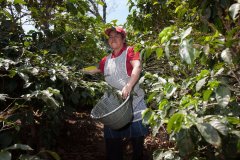
A cup of Fairtrade coffee gives coffee farmers in Central and South America a democratic dream.
Professional baristas exchange please pay attention to coffee workshop (Wechat official account cafe_style) Fair Trade is a consumer movement initiated by European and American non-profit organizations. Fifty or sixty years ago, they felt that bananas, coffee and other bulk substances that had been widely used in their lives for a long time came from poor third World countries, but the wages of local farmers were far lower than the poverty line, so they initiated their own initiative.